What is Transitional Interior Design? A Guide for Your Home
Estimated reading time 7 minutes
Some interior design trends come and go, but some styles endure because they strike the perfect balance between beauty, practicality, and timeless appeal. Transitional interior design is one such approach.
This design combines the elegance and craftsmanship of traditional interiors with the clean lines and simplicity of contemporary living. The result is a home that feels refined without being formal, sophisticated without feeling overstated, and designed to evolve gracefully over time.
Whether you're renovating a period property, enhancing a modern home with more character, or investing in bespoke furniture that will stand the test of time, transitional design offers a versatile foundation.
What is transitional interior design?
Transitional interior design bridges the gap between traditional and contemporary design. It takes the most enduring qualities from both to create spaces that feel balanced and effortlessly liveable.
Emerging in response to the contrast between highly traditional interiors and the rise of modern minimalism, transitional design offers a middle ground. It retains the craftsmanship, quality materials, and sense of permanence associated with classic interiors, but also embraces the cleaner lines, openness, and simplicity of contemporary spaces.
Unlike purely traditional schemes, which often favour ornate detailing and formal layouts, transitional interiors feel lighter and more relaxed. Equally, they avoid the starkness that can sometimes come with modern design, introducing warmth and texture through carefully chosen materials and furnishings.
At its core, transitional design is guided by balance. Every element is selected to create harmony rather than draw attention to itself. Transitional interiors end up feeling timeless rather than trend-led, offering a sophisticated backdrop that can evolve with changing tastes and lifestyles.
The defining characteristics of transitional style
While every transitional interior is unique, the style is defined by a set of core principles that create its distinctive sense of balance and understated elegance.
Balance and proportion above all else
At the heart of transitional design is a commitment to harmony. Rather than relying on bold statements or excessive decoration, the focus is on achieving visual balance through carefully considered proportions, symmetry, and scale.
Furniture, cabinetry, lighting, and accessories are selected to complement one another, creating a cohesive scheme where no single element overwhelms the space. The overall effect feels calm, intentional, and effortlessly refined.
Neutral, layered colour palettes
Transitional interiors typically favour a restrained colour palette built around warm neutrals and muted tones. Soft whites, taupes, greiges, warm greys, and earthy shades provide a timeless foundation that allows materials and craftsmanship to take centre stage.
Rather than introducing contrast through bright colours, depth is created through subtle layering, with different tones and textures working together to add richness and interest.
Clean lines softened by texture
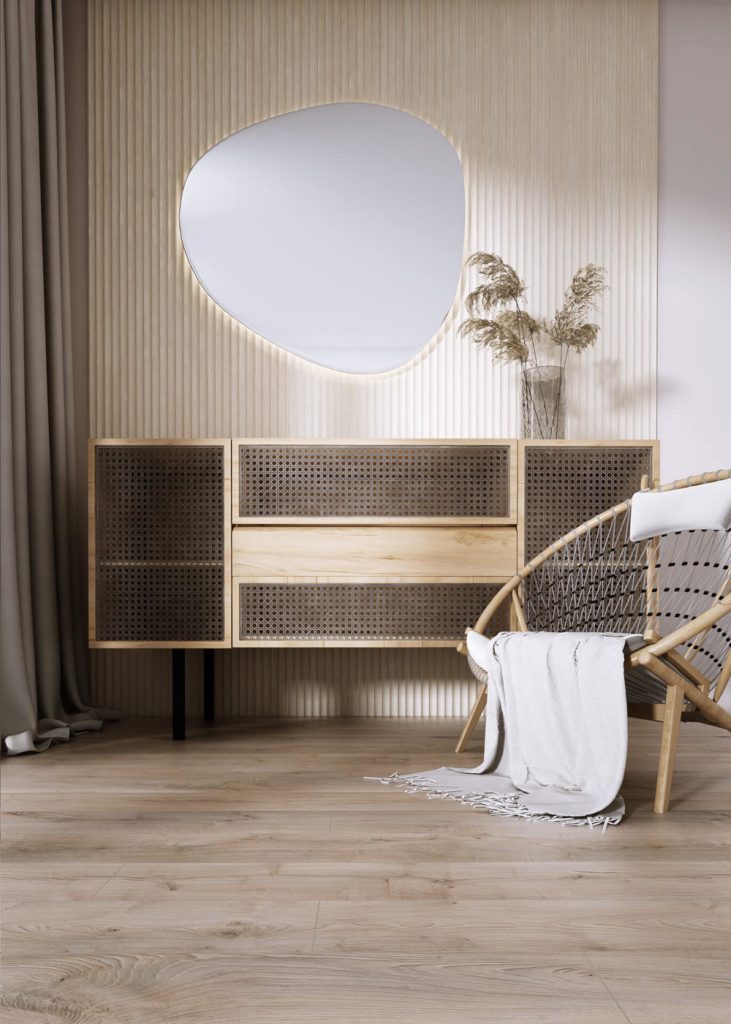
Unlike traditional interiors, which often feature ornate detailing, transitional spaces embrace cleaner silhouettes and more streamlined forms. However, these simplified lines are balanced with tactile materials and layered textures that prevent the room from feeling stark or clinical.
Natural timber, linen, wool, stone, and upholstered furnishings all contribute warmth and create an environment that feels both sophisticated and inviting.
A curated mix of classic and contemporary forms
Transitional design draws inspiration from multiple periods rather than adhering strictly to one aesthetic. A classic upholstered armchair could sit alongside a contemporary coffee table, and traditional architectural features can be complemented by modern lighting and accessories.
The key is restraint. Each piece is chosen for its quality and contribution to the overall scheme, which ensures the space feels cohesive.
Quality over ornamentation
Perhaps the most defining characteristic of transitional design is its emphasis on craftsmanship. Attention is directed towards the quality of materials, the precision of joinery, and the refinement of finishes rather than decorative excess.
From bespoke cabinetry to carefully selected furniture, every element serves a purpose, contributing to an interior that feels elegant, enduring, and thoughtfully considered.
The role of bespoke fitted furniture in transitional design
Bespoke fitted furniture is central to transitional interior design, as it brings a cohesion, proportion, and refinement that off-the-shelf pieces often struggle to deliver. Because this style relies on balance and seamless integration, anything that feels slightly out of place can disrupt the overall harmony of a space.
Standard furniture is designed to work in a wide range of homes, which means it rarely aligns precisely with the architecture, layout, or proportions of a specific interior. In transitional schemes, where subtlety and continuity are essential, this can lead to visual imbalance and a lack of cohesion across rooms.
Made-to-measure cabinetry and joinery resolve this by becoming part of the architecture itself. Each piece is designed around the space it occupies, which ensures a unified aesthetic throughout the home. Storage and furniture are no longer separate elements, but part of a single, considered design language.
Kingswood’s approach reflects this philosophy, with fully bespoke designs tailored to both the home and the individual. Every piece is handcrafted to achieve a precise fit and a refined finish, supporting the understated elegance that defines transitional interiors.
Our commitment to craftsmanship and longevity is reinforced by a 25-year guarantee, offering confidence that each piece is built not only for how a home looks today, but for how it will live and evolve over time.
Room by room: how to apply transitional design in your home
Transitional design works best when it is considered holistically, with each room contributing to a cohesive overall scheme. The principles remain consistent throughout the home, but their expression shifts depending on how each space is used.
Living spaces: balancing classic silhouettes with uncluttered layouts
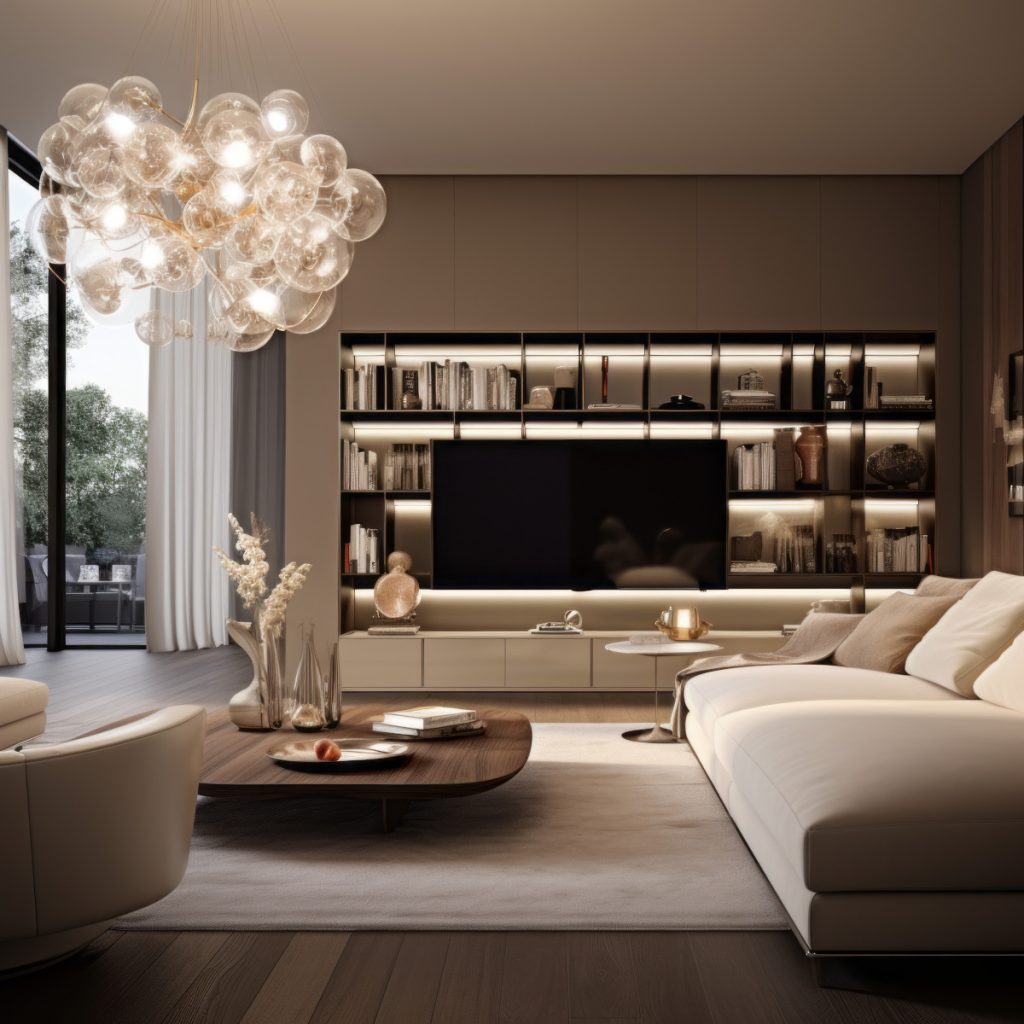
Living rooms in transitional homes often centre around a sense of calm and proportion. Classic furniture shapes, such as tailored sofas and upholstered armchairs, are paired with simpler coffee tables and understated storage pieces.
The layout tends to prioritise openness and flow, avoiding overcrowding in favour of carefully chosen statement pieces. Textures such as wool, linen, and wood help to soften the space, and subtle lighting layers add depth without distraction.
Bedrooms: calm, considered, and built around comfort
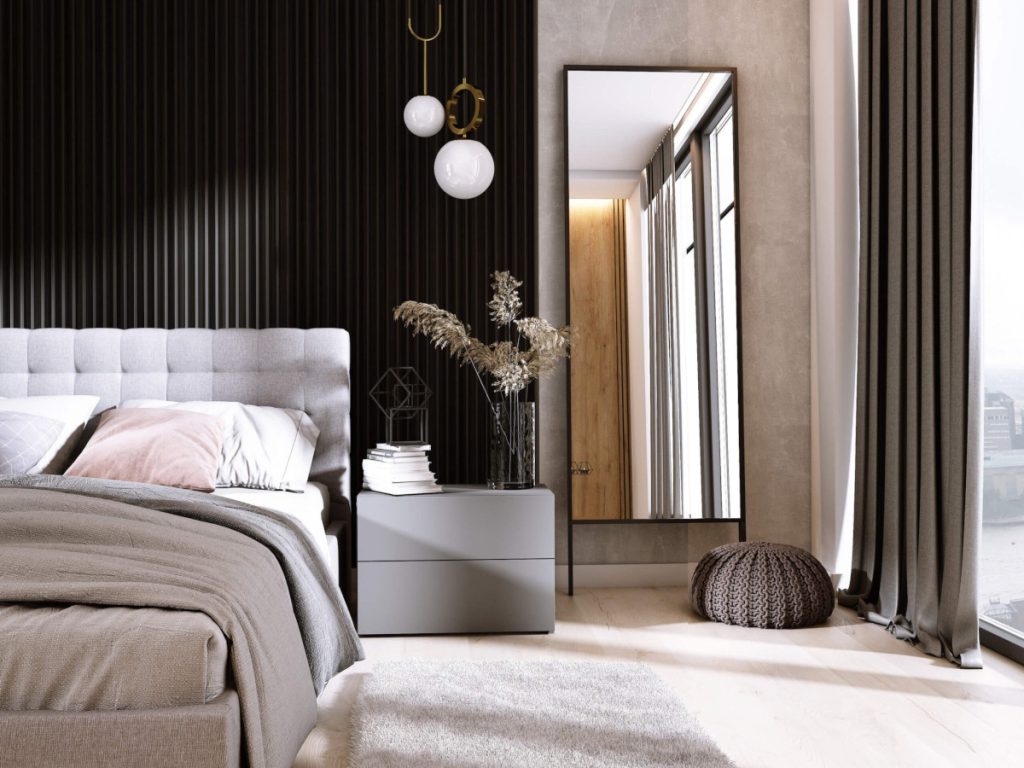
In bedrooms, transitional design leans into softness and restraint. Neutral colour palettes and natural materials create a restful atmosphere, and furniture remains elegantly simple in form.
This is where bespoke fitted furniture plays a particularly important role. Made-to-measure wardrobes and joinery help to maintain clean lines and a seamless finish, and ensure that storage feels integrated rather than imposed.
Home offices and dressing rooms: function refined into form
Transitional design is especially effective in more functional spaces, where practicality needs to be balanced with aesthetic quality. In home offices, streamlined desks, refined cabinetry, and considered lighting create an environment that feels professional without being harsh.
Dressing rooms benefit from similar principles. Bespoke joinery allows for tailored storage that maximises space while maintaining visual consistency, which means your everyday routines take place within a carefully composed setting.
How to begin your transitional interior journey
Creating a transitional interior starts with understanding the fundamentals of the space itself. Before selecting furniture or finishes, it’s important to consider the architecture, proportions, and natural light, as these elements form the foundation of a balanced and cohesive design.
From there, focus on investing in pieces that are built to last. Transitional interiors rely on quality over quantity, with craftsmanship playing a central role in achieving a timeless feel. Choosing well-made materials and enduring designs helps ensure the space remains relevant and refined over time.
Working with specialists who understand how to balance traditional influence with contemporary simplicity can make a significant difference. Transitional design is nuanced, and getting the proportions, finishes, and detailing right often requires a considered, experienced approach.
For those looking to bring this style into their home, Kingswood offers a complimentary design consultation. It’s an opportunity to explore bespoke, handcrafted furniture designed around your space, helping you create a home that feels balanced, timeless, and entirely your own.
Contact us for more information or book your design appointment today.
We offer a complimentary design visit in your home.
If you would like to get in touch with us about a project, please email us or call us on 0800 470 1112.