How to Design Your Wardrobe Interior
Estimated reading time 7 minutes
The exterior of a wardrobe might define the look of a bedroom, but it's the interior that determines how well it works for you. A thoughtfully designed layout can make getting ready easier, keep belongings organised, and ensure every inch of space is used effectively.
From hanging rails and shelving to drawers, shoe storage, and lighting, the right combination depends entirely on how you live. In this guide, we'll explore how to design a wardrobe interior that complements your routine, your belongings, and your space.
Start with how you actually use your wardrobe
Before choosing shelves, drawers, or hanging rails, it's worth taking a step back and thinking about how you use your wardrobe. The most successful fitted wardrobe interiors will be tailored around the items you own and the way you live.
Consider what you reach for most often when getting dressed. If your wardrobe is filled with workwear, you could benefit from generous hanging space for shirts, blouses, and jackets. If you prefer casual clothing, more shelving and drawer storage for folded items could make better use of the available space.
It's also important to think about who will be using the wardrobe. For example, a shared wardrobe might require separate zones for each person, whilst growing families often benefit from adaptable storage that can evolve over time.
Finally, take stock of the items that need regular access versus those used only occasionally. Everyday essentials should be positioned within easy reach, whereas seasonal clothing, suitcases, and special occasion outfits can be stored higher up or in less accessible areas.
Plan your hanging space
Hanging storage is often the foundation of a well-designed wardrobe interior. The right combination of rail heights and hanging zones can help prevent creased clothing and make better use of the available space.
Long hanging vs double hanging
Long hanging sections are ideal for clothing that needs additional vertical space, such as dresses, coats, suits, and formalwear. These areas prevent garments from becoming crushed at the bottom and help to keep your occasionwear in excellent condition.
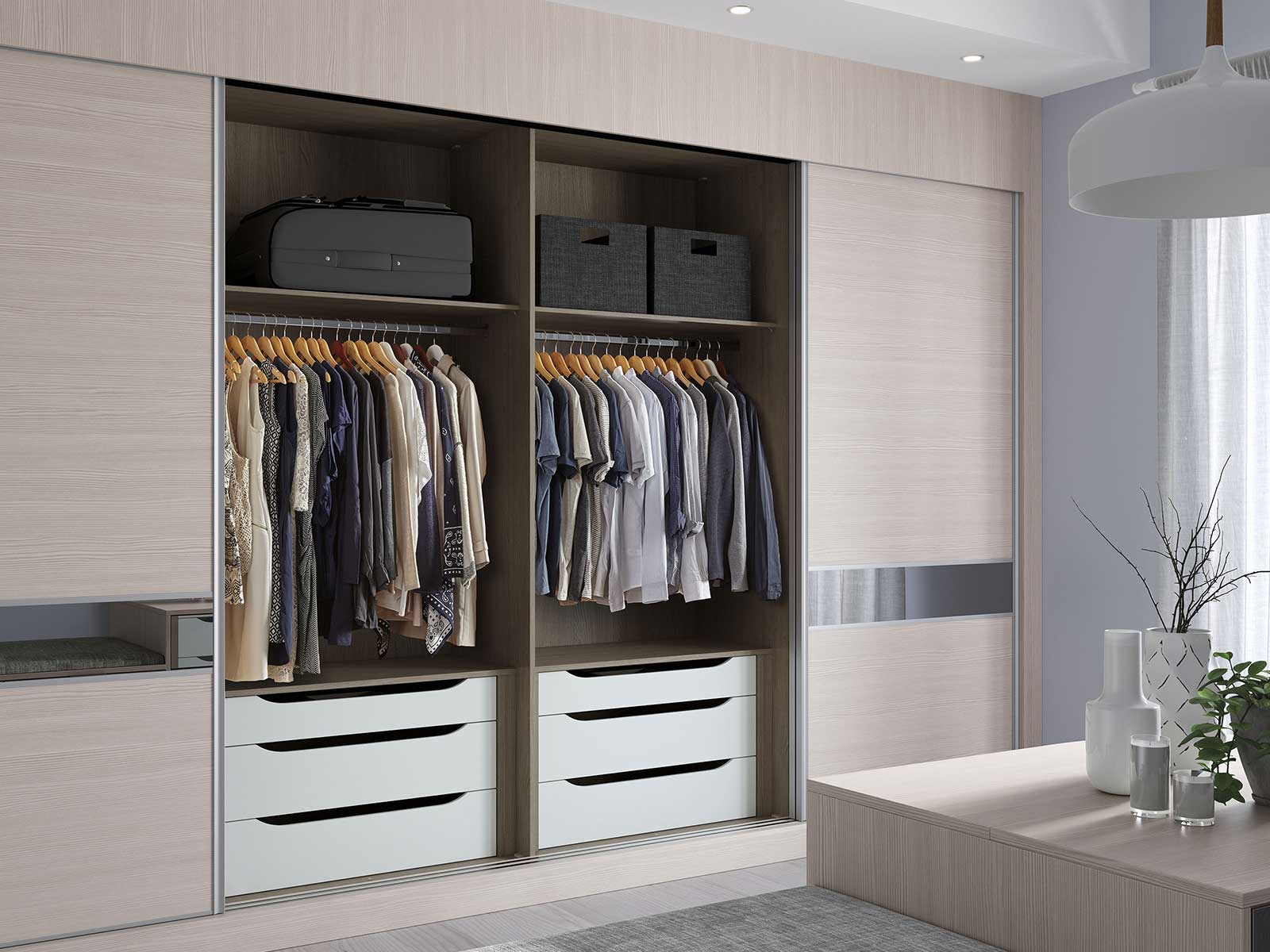
For everyday clothing, double hanging rails can significantly increase storage capacity. By placing one rail above another, it's possible to accommodate shirts, blouses, trousers, skirts, and shorter jackets while making full use of the wardrobe height. Many homeowners find that a combination of long and double hanging sections provides the best balance.
Rail placement and accessibility
The position of your hanging rails can make a noticeable difference to how comfortable the wardrobe is to use. Rails should be placed at a height that allows clothing to be reached easily without stretching or straining, especially for items you use every day.
It's also important to leave enough clearance around hanging garments. Bulkier coats, longer dresses, and protective garment bags all require additional room to hang properly. A bespoke wardrobe design will take these details into account and ensure every section functions as intended.
Get the balance of shelves and drawers right
Hanging space is essential, but shelves and drawers play an equally important role in creating a wardrobe that stays organised and easy to use. The key is to find the right balance between the two, so you can ensure every item has a dedicated place while making the most of the available space.
Shelving for folded items
Shelving can be used for clothing and accessories that don't need to be hung. Knitwear, jeans, folded loungewear, handbags, and storage boxes can all be neatly arranged on shelves, keeping them visible and easy to access.
Adjustable shelving is particularly valuable in a bespoke wardrobe design. As your storage needs change over time, shelves can be repositioned to accommodate different items, which gives you greater flexibility without needing to replace the entire interior.
Drawers for delicates and accessories
Drawers help create a cleaner, more streamlined interior by keeping smaller items out of sight but still within easy reach. They're ideal for storing underwear, nightwear, accessories, and other everyday essentials that can quickly create clutter when left on open shelves.
Don't forget shoes and accessories
A wardrobe interior should be designed around more than just clothing. Shoes, bags, belts, jewellery, and other accessories can quickly become difficult to organise without dedicated storage, making it harder to keep the space tidy and functional.
For shoe collections, bespoke wardrobes can incorporate either angled or flat shelving depending on the number and style of shoes being stored. Angled shelves can make footwear easier to view and access, while flat shelves often provide greater flexibility for a mix of shoes, boots, and storage boxes. Pull-out shoe racks are another practical option, allowing you to neatly store multiple pairs and bring them forward for easier access.
Accessories benefit from equally thoughtful organisation. Pull-out racks for belts and ties, internal hooks for handbags, and dedicated compartments for jewellery can all help maximise space whilst keeping frequently used items within easy reach.
Add lighting and finishing details
The practical layout of a wardrobe is important, but the finishing touches are what elevate it from simple storage to a truly considered part of the room. Features such as lighting, mirrors, and interior finishes can improve both functionality and the overall experience of using the space.
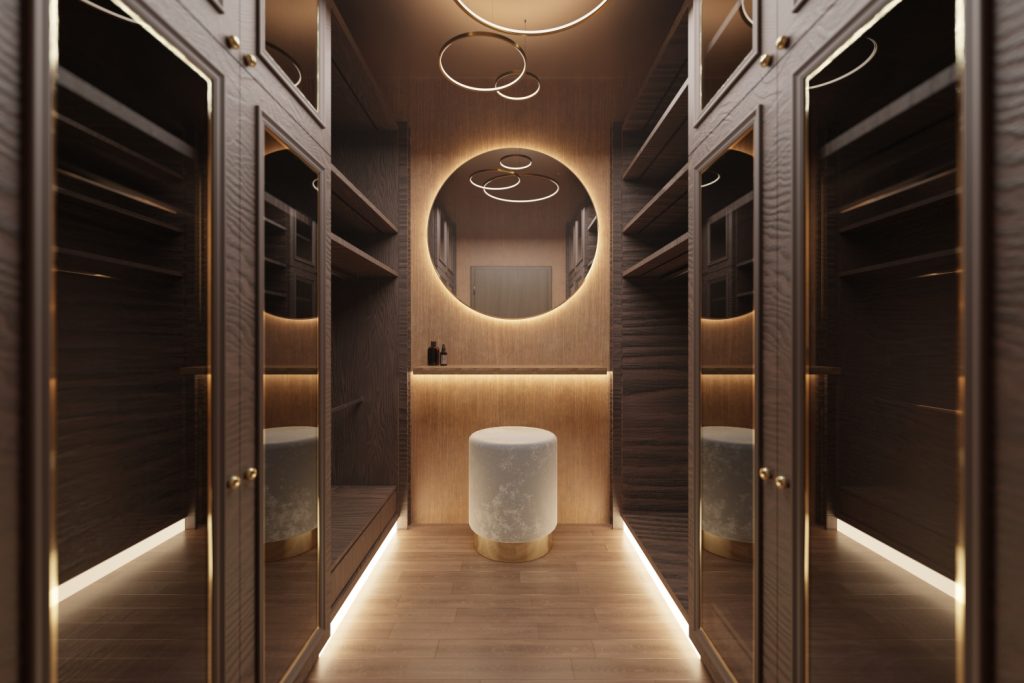
Internal LED lighting makes it easier to find clothing and accessories, particularly in deeper wardrobes or rooms with limited natural light. Integrated lighting can illuminate shelves, hanging sections, and drawers to keep every part of the wardrobe visible.
Mirrors are another valuable addition, as they provide both functionality and a greater sense of space within the room. Depending on the design, they can be incorporated into wardrobe doors or positioned nearby to complement the overall layout.
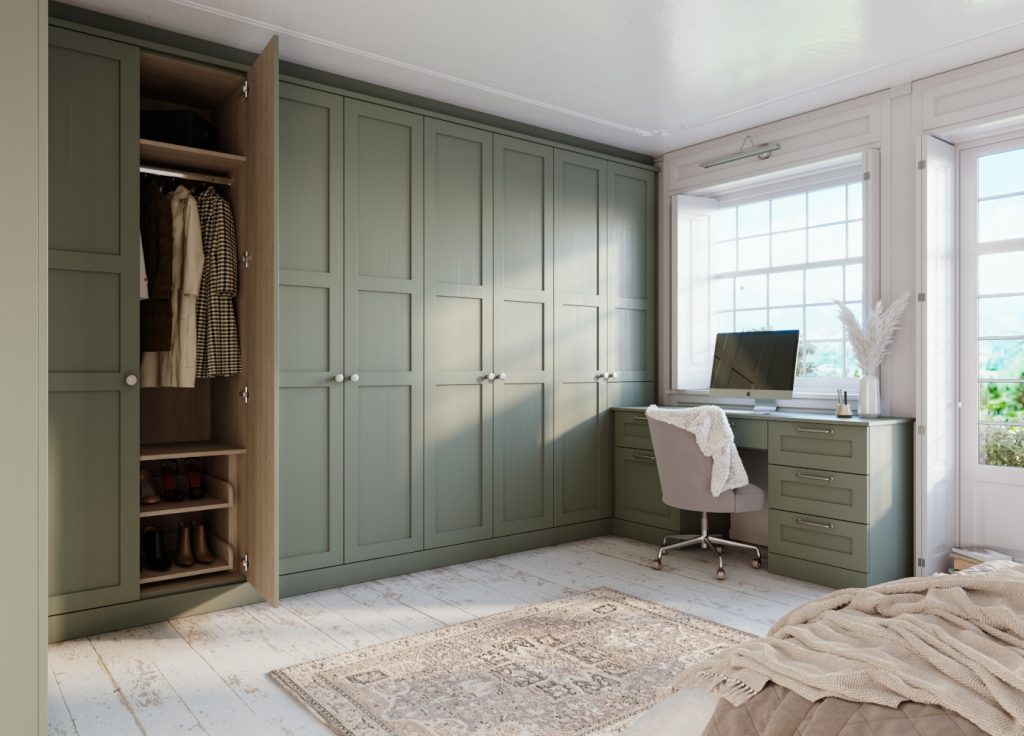
Finally, don't overlook the impact of handles, internal finishes, and colour choices. From warm wood-grain interiors to contemporary painted finishes, these details help to create a wardrobe that feels cohesive and tailored to your home. When thoughtfully selected, they can transform the wardrobe from a purely functional feature into a beautifully crafted piece of furniture.
Let a Kingswood designer bring it all together
Designing the perfect wardrobe interior involves far more than deciding where shelves and rails should go. Every household has different storage requirements, routines, and priorities, which is why a tailored approach can make all the difference.
At Kingswood, every project begins with a complimentary design consultation. One of our experienced designers will take the time to understand how you use your space, the items you need to store, and the look you want to achieve. From hanging configurations and drawer layouts to finishes, accessories, and lighting, every detail is considered as part of the design process.
Ready to design a wardrobe interior that works for you?
A beautifully designed wardrobe should make everyday life easier, with a layout that reflects your routine, your belongings, and the way you use your bedroom.
If you're ready to create a wardrobe interior designed around your lifestyle, speak to the Kingswood team today.
Book your complimentary design consultation and discover how our bespoke designers can transform your storage into a considered feature of your home.
We offer a complimentary design visit in your home.
If you would like to get in touch with us about a project, please email us or call us on 0800 470 1112.