How to Ventilate a Built-In Wardrobe (and Why It Matters)
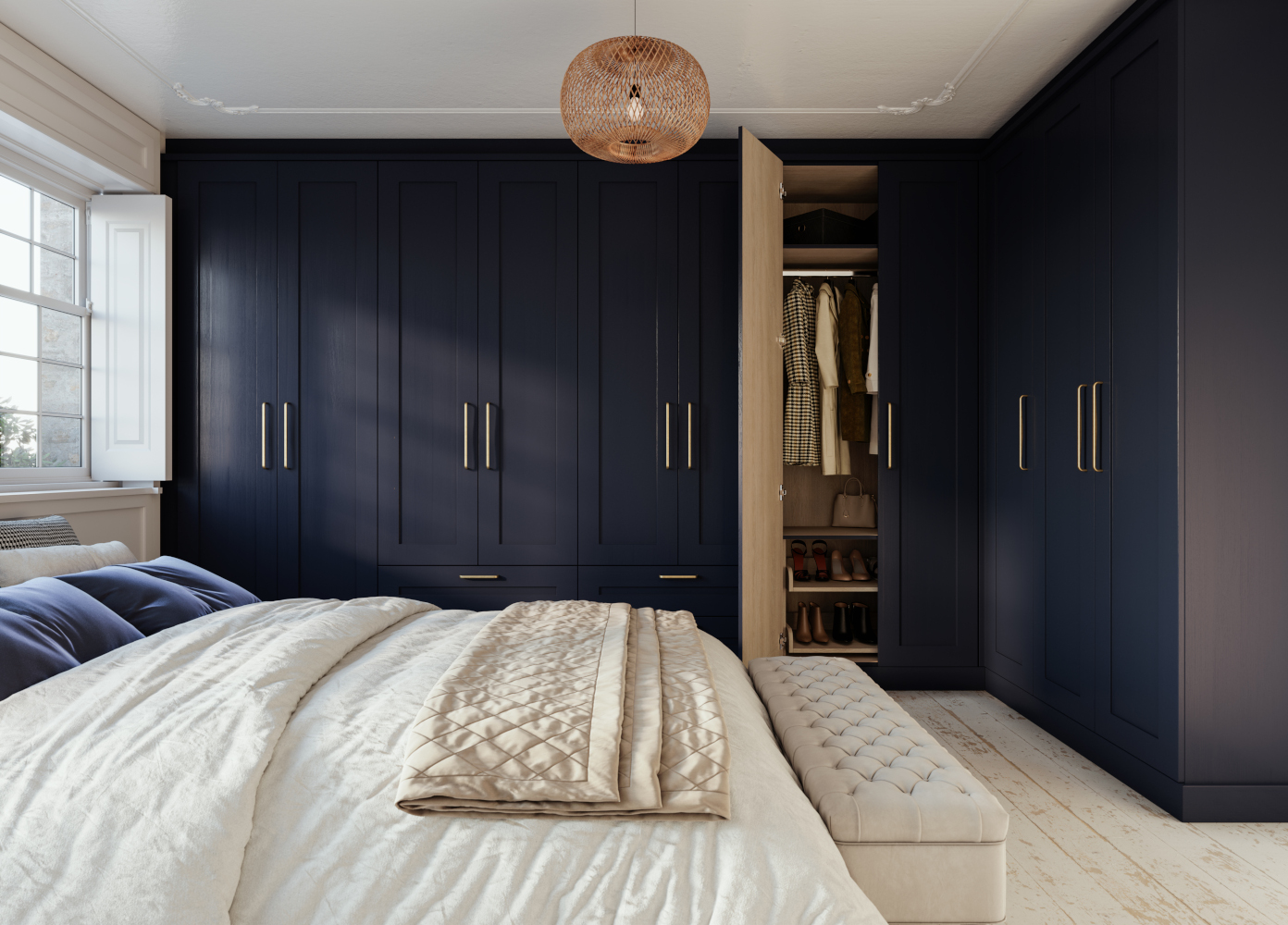
Estimated reading time 8 minutes
Open a wardrobe door that hasn't been touched in a while, and you'll know immediately if something isn't right. A faint mustiness, clothes that feel ever so slightly damp - these are the subtle signs that your built-in wardrobe isn't breathing as it should.
It's a more common problem than most people realise, and it's rarely down to the clothes themselves. In most cases, poor ventilation is the root cause - warm, moisture-laden air becomes trapped in an enclosed space with nowhere to go. Over time, that trapped air takes its toll on your wardrobe's interior and, more importantly, on everything stored inside it.
The good news is that wardrobe ventilation isn't complicated, and in many cases, it doesn't require a complete overhaul. Whether you're looking for a quick practical fix or considering a bespoke wardrobe design that builds ventilation in from the outset, this guide covers everything you need to know.
Why built-in wardrobes need good airflow
Built-in wardrobes naturally have less airflow than freestanding furniture because they sit flush against walls and are enclosed on multiple sides. Without proper built in wardrobe ventilation, moisture can become trapped inside, which can lead to stale air and condensation.
Fitted wardrobes that are positioned against external walls are often even more vulnerable. These walls tend to be cooler, particularly during winter, so the warm air in the room can create wardrobe condensation when it meets the colder surfaces.
Good ventilation doesn’t need to rely on just keeping wardrobes open. It just needs to allow gentle air circulation to prevent moisture from lingering. Thoughtful wardrobe design, spacing, and discreet wardrobe air vents can all help to improve airflow whilst maintaining a seamless finish.
What happens to clothing in a poorly ventilated wardrobe
Poor airflow doesn’t just affect the wardrobe; it affects the clothes inside it too. One of the first signs is often a musty smell, especially on items that have been stored for a while. Clothes might also feel slightly damp or cold to the touch, even if the rest of the room feels dry.
Trapped moisture can affect delicate fabrics such as wool, cashmere, silk, and leather, leaving them feeling less fresh and potentially shortening their lifespan. Seasonal items such as coats or occasion wear could also need airing or rewashing before use.
If clothes regularly feel stale or damp, it’s often a sign that airflow inside the wardrobe needs attention. Even small improvements to ventilation can help keep clothing fresher and better protected.
You can read our guide on how to stop clothes smelling musty in your wardrobe for more tips on keeping your clothing fresh.
Signs your wardrobe isn't breathing properly
Poor airflow isn’t always obvious straight away. Often, the signs build gradually, so it can be easy to overlook the problem until your clothes start feeling damp or stale. If you’re unsure whether poor built in wardrobe ventilation could be affecting your space, here are some common warning signs to look out for:
- Condensation on internal surfaces.
- A stale or musty smell when you open the doors.
- Clothes feeling damp or cold to the touch.
- Damp patches on the walls near the wardrobe.
- The wardrobe feels colder than the rest of the room.
What causes poor ventilation in a built-in wardrobe
Poor wardrobe ventilation is usually the result of a combination of design, placement, and everyday use rather than a single issue. One of the most common causes is positioning against an external wall, where cooler surfaces increase the likelihood of wardrobe condensation when warm air meets colder areas.
Airflow restrictions can make the problem worse. Wardrobes that have been fitted tightly against walls, with little or no air gap, or those using solid back panels, can trap moisture and limit circulation.
How the wardrobe is used also has an impact. Overpacking reduces space for air to move between garments, which can lead to lingering moisture and clothes feeling less fresh. Even floor-to-ceiling designs, while visually seamless, can contribute to trapped air if ventilation hasn’t been considered in the construction.
The key issue is that airflow is often overlooked in standard designs. A more thoughtful, bespoke approach allows ventilation to be built into the wardrobe from the start, to help maintain a fresher, more stable environment for clothing and storage.
Wardrobe ventilation ideas: From quick fixes to long-term solutions
If your wardrobe feels damp or stale, there are a few simple wardrobe ventilation ideas that can help to improve airflow. Leaving doors ajar occasionally, particularly during humid weather, can encourage circulation. Moisture absorbers can also help to manage excess humidity. You can also improve the spacing between clothes to stop air from becoming trapped.
However, these fixes are often temporary. If damp smells, condensation or clammy clothes keep returning, the issue could be linked to the wardrobe design itself. In these cases, proper built-in wardrobe ventilation is usually the more effective long-term answer.
Wardrobe air vents: where to place them and why
Well-placed wardrobe air vents can improve circulation, but positioning matters. In most cases, airflow works best when cooler air enters lower down and warmer air escapes higher up.
Common placements for vents for wardrobes include plinths, top panels, or discreet internal areas where they can support airflow without disrupting the design. When they’re carefully integrated, wardrobe air vents can remain subtle and still make a noticeable difference.
Ventilation that works with your interior
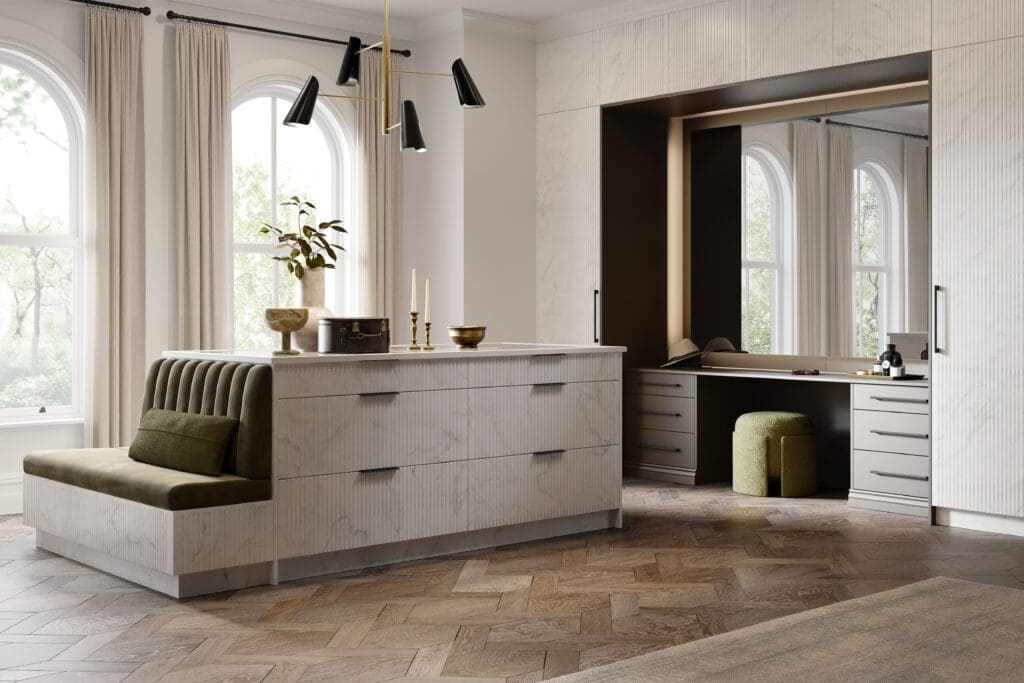
Good ventilation should feel like part of the design, not an obvious add-on. Features such as louvred panels, slatted bases, toe kick gaps, and discreet grilles can all improve airflow whilst maintaining a seamless finish.
With bespoke joinery, these details can be considered from the start to create a wardrobe that looks beautiful while helping protect the clothes stored inside.
How bespoke fitted wardrobes can be designed with ventilation built in
When wardrobe condensation becomes a recurring problem, improving airflow is often easier when ventilation is considered from the beginning rather than added afterwards. This is where bespoke fitted wardrobes have a clear advantage over off-the-shelf furniture or standard fitted units.
At Kingswood, ventilation is considered as part of the wider wardrobe design process. Factors such as the room layout, wall positioning, airflow, and how the space will be used all help shape the final design. For wardrobes positioned on external walls, for example, precise construction details considered alongside the overall design can help to reduce trapped moisture.
Materials and craftsmanship also play an important role. Using the finest materials and handcrafted joinery allows for practical design details to be incorporated discreetly, so your wardrobe is functional and beautiful.
Rather than relying on generic designs, our completely bespoke approach allows every detail to be tailored to the space, including how air moves around clothing and stored belongings.
When to call in an expert
Some wardrobe ventilation issues can be improved with small changes, but there are times when the problem goes beyond quick fixes. If condensation, stale smells, or damp-feeling clothes keep returning despite trying basic solutions, it often points to a deeper issue with how the wardrobe has been designed or installed.
This is especially likely in fitted wardrobes that have been positioned against external walls, or in spaces where airflow wasn’t considered during the design stage. In these cases, the root cause is usually structural rather than situational, so surface-level adjustments will only ever offer limited improvement.
If you are also noticing recurring moisture-related issues elsewhere in the home, it might be worth looking at how different factors interact across the space. Our guide on how to prevent mould in a built-in wardrobe explores related causes and preventative steps in more detail.
When the wardrobe itself is the source of the problem, a redesigned solution is often the most practical long-term answer. A bespoke approach allows ventilation, layout and materials to be considered together, rather than trying to retrofit fixes into an existing structure.
A wardrobe designed to last, inside and out
Ventilation is just one part of what makes a well-designed fitted wardrobe work properly. When it’s considered from the outset, alongside layout, materials, and craftsmanship, the result is a space that not only looks seamless but also protects what is stored inside it.
Kingswood designs bespoke wardrobes that balance aesthetics with everyday function, taking into account the realities of each room rather than relying on one-size-fits-all solutions. With handcrafted joinery, finest materials, and over 100 years’ experience, every piece is created to feel as solid and considered as the home it belongs in.
If condensation or airflow concerns are affecting your current wardrobe, a tailored design could offer a more effective long-term solution.
Book a consultation to explore a bespoke wardrobe designed around your space, your home, and how you live.
We offer a complimentary design visit in your home.
If you would like to get in touch with us about a project, please email us or call us on 0800 470 1112.