What is Colour Drenching? A Guide to Getting it Right at Home
Estimated reading time 6 minutes
Colour drenching is a bold and effective way to transform a room, using a single colour across walls, ceilings, and joinery to create a cohesive, immersive look. When done well, it can make spaces feel calm, considered, and strikingly stylish. This guide will take you through what colour drenching is and offer tips for getting it right in your home.
What is colour drenching in interior design?
Colour drenching is an interior design approach where a single colour is used across multiple surfaces within a space. Rather than limiting colour to just the walls, it extends to ceilings, woodwork, doors, and often built-in furniture to create a cohesive, immersive look.
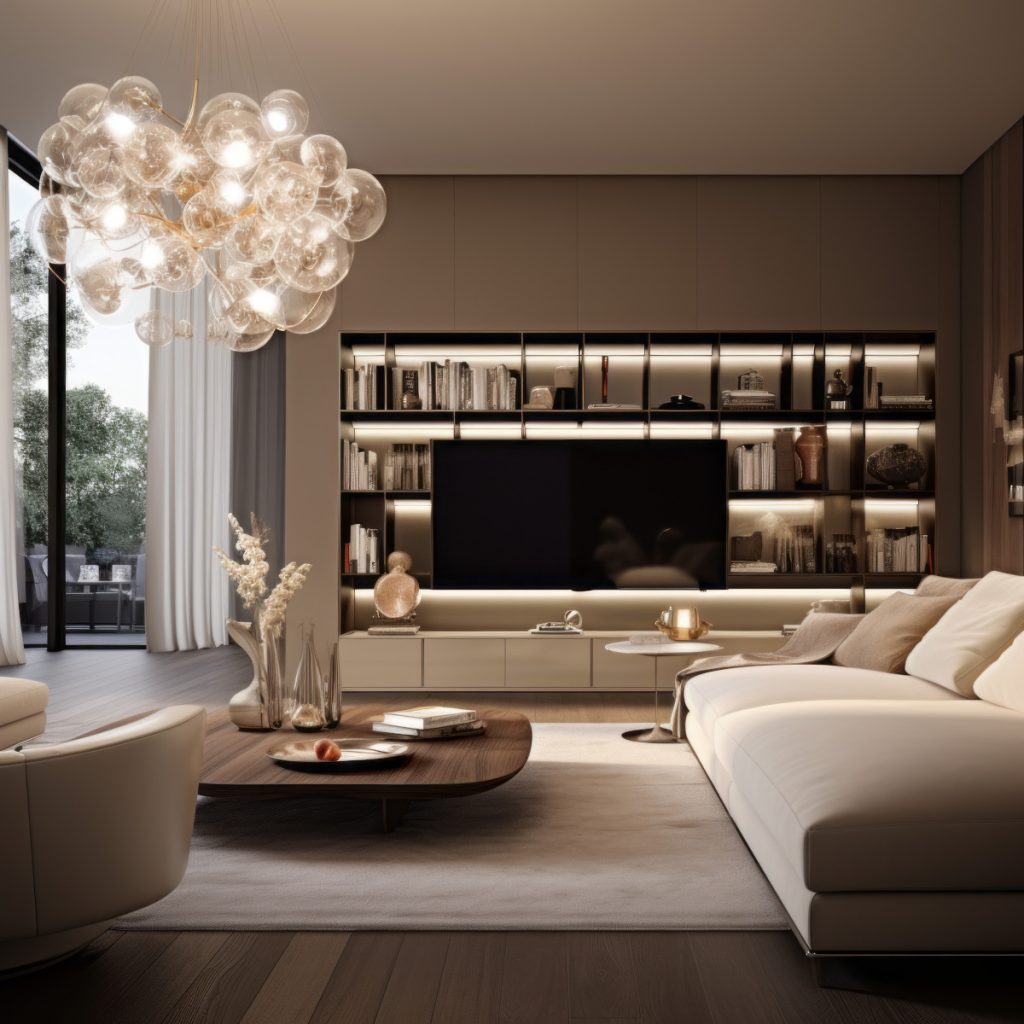
The aim is to reduce visual breaks so the eye moves smoothly around the room. When done well, colour drenching can make spaces feel calmer and more intentional. It works just as effectively with soft neutrals as it does with deeper, more dramatic tones, depending on the atmosphere you want to create.
Why colour drenching works
Colour drenching works because it creates visual continuity. By using one colour across walls, ceilings and architectural details, the space feels more cohesive, rather than broken up by contrast. This sense of flow can make rooms feel calmer and more balanced.
It can also enhance the proportions of a room. Removing sharp colour changes helps to blur edges, which can make smaller spaces feel more expansive and larger rooms feel more refined. In rooms with awkward angles or lower ceilings, colour drenching can soften transitions and reduce visual clutter.
Another reason it works so well is its ability to highlight craftsmanship. When everything sits within the same colour family, attention naturally shifts to materials, textures and detailing. This makes colour drenching an ideal choice for bespoke interiors, where joinery, cabinetry and finishes are designed to be noticed without overwhelming the space.
Where colour drenching can work best
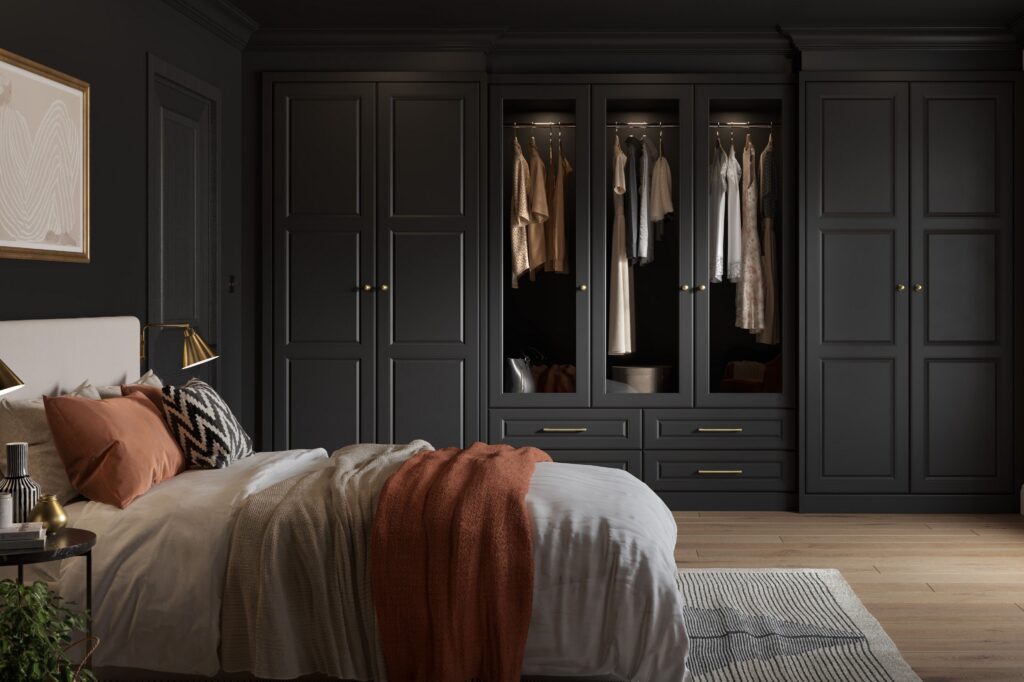
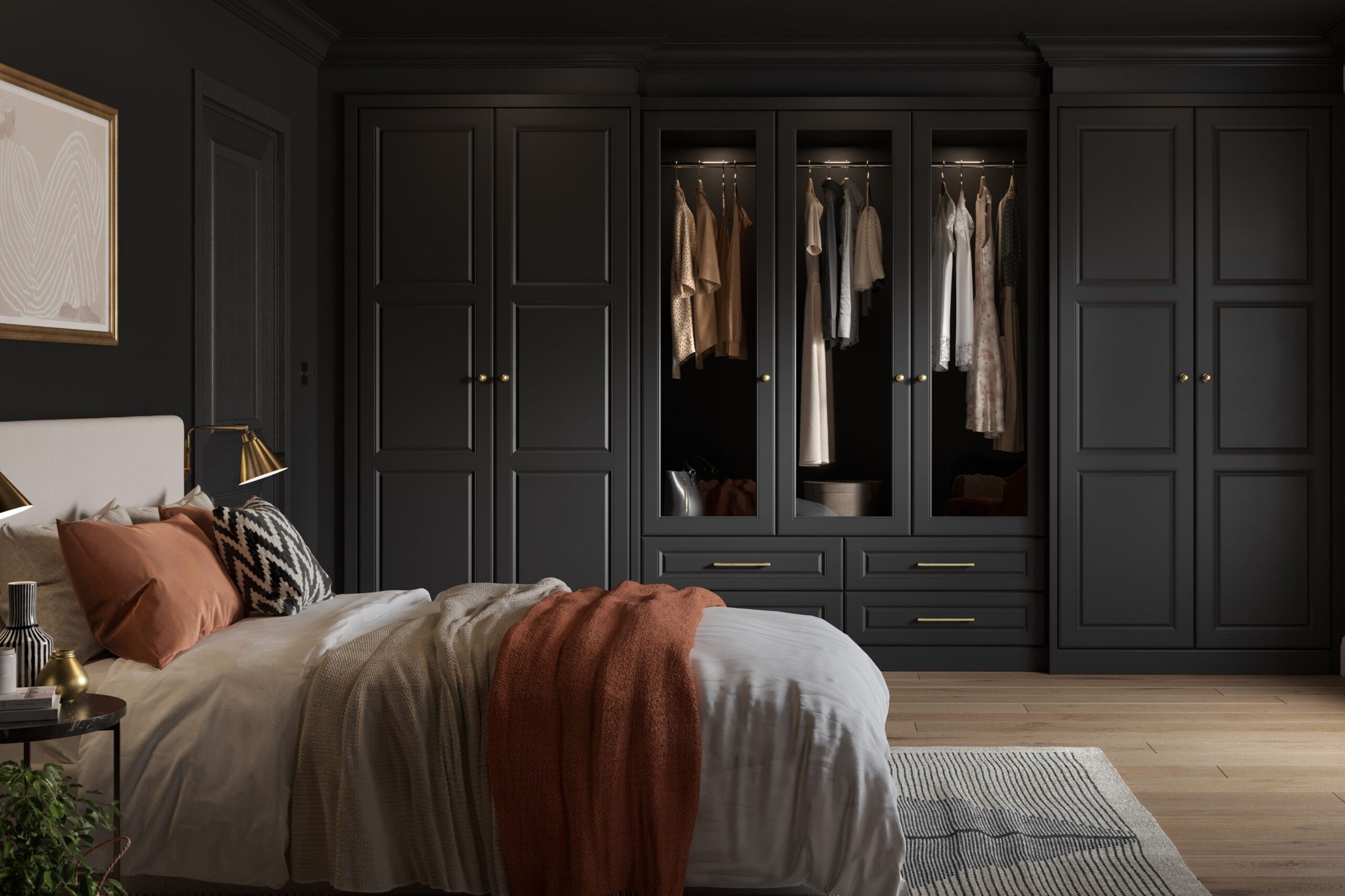
Colour drenching works best in spaces where you want to create a strong sense of atmosphere and cohesion. Bedrooms are a natural fit, as a single, enveloping colour can feel restful and intentional, especially when carried across fitted wardrobes, ceilings, and woodwork.
It’s also highly effective in living areas and snug spaces, where colour can help define the room and give it a more considered feel. In open-plan homes, colour drenching can be used to subtly zone areas without relying on physical dividers or contrasting palettes.
Hallways, studies and dressing rooms can also effectively utilise colour drenching. These spaces often benefit from a confident design approach, and using one colour throughout can turn them into standout features rather than transitional areas.
How to choose the right colour for colour drenching
To choose the right colour for colour drenching, you’ll need to first consider the mood and atmosphere you want for the room. Soft, muted neutrals will create a sense of calm and understated elegance, which can make them ideal for spaces designed for relaxation. On the other hand, deeper, richer tones will add drama, warmth, and intimacy, giving rooms a bold, confident character.
It’s important to think about how the colour will sit within the broader context of your home. The shade should feel harmonious with adjoining rooms and complement your overall design palette to ensure a smooth visual flow throughout the space. Colour drenching works best when the chosen hue feels intentional rather than accidental.
Testing the colour on larger surfaces can help you understand its full effect. A sample patch lets you see how it reads in the room and whether it creates the atmosphere you’re aiming for, so you can make a confident choice before committing to the full drench.
How to balance colour drenching with light and space
It’s essential to balance colour drenching with light and space to prevent a room from feeling overwhelming. In smaller spaces, lighter or softer tones can help maintain a sense of openness, whilst still allowing the colour to create cohesion. In larger rooms, richer or more intense shades can add warmth and intimacy without making the space feel closed in.
You’ll need to consider how the colour will interact with the room’s proportions. Using the same shade on walls, ceilings, and joinery can blur edges and create a sense of flow, but going for too dark a colour in a low-ceilinged room can make it feel heavy. Conversely, in tall or expansive spaces, a deep hue can help anchor the room and make it feel more inviting.
The key is to ensure the colour complements the sense of space rather than competes with it. When done thoughtfully, colour drenching will enhance the room’s architecture and scale, creating a balanced, harmonious environment.
Finishes and materials that can elevate colour drenching
Finishes and materials play an important role in elevating colour drenching beyond a simple paint choice. Matte or eggshell finishes can give walls and joinery a soft, sophisticated look, whereas subtle sheen or lacquered surfaces will add depth and a sense of luxury.
You can incorporate texture through fabrics, timber, or stone in the same colour family to also enhance the effect. Even within a single shade, the variation in materials will reflect light differently, which adds interest and prevents the space from feeling flat.
Common colour drenching mistakes to avoid
Even the most confident colour choices can be undermined by small missteps. Below are some common pitfalls to avoid to ensure your colour drenching feels intentional, balanced, and refined:
- Choosing a colour that feels disconnected from the rest of the home, breaking the visual flow.
- Applying too dark a shade in a small or low-ceilinged room, which can make the space feel heavy or closed in.
- Overlooking the scale of the room, so the colour overwhelms rather than enhances the space.
- Using finishes or materials that clash with the chosen colour, creating unintended contrast or distraction.
- Failing to test the colour on larger surfaces before committing, leading to unexpected results once fully applied.
- Ignoring the proportion of furniture and joinery, so the colour drench feels uneven or unbalanced.
- Forgetting that colour intensity can feel different across walls, ceilings, and cabinetry, which can disrupt cohesion if not carefully considered.
How bespoke design helps get colour drenching right
Bespoke design is what allows colour drenching to truly shine. By tailoring every element of a space, from joinery and cabinetry to doors and panels, to your chosen colour, the result feels seamless and intentional. Each piece can be precisely integrated so that the drench flows naturally, highlighting the room’s architecture rather than interrupting it.
For a home where colour drenching feels effortless and refined, Kingswood’s expert team can design and craft every element to your specifications. Contact us to explore how bespoke joinery and cabinetry can bring your colour vision to life.
We offer a complimentary design visit in your home.
If you would like to get in touch with us about a project, please email us or call us on 0800 470 1112.