Small Walk-In Wardrobe Ideas for Compact Spaces
Estimated reading time 9 minutes
A small walk-in wardrobe is one of the most transformative upgrades you can make to a bedroom. Even in a compact space, a well-designed walk-in wardrobe can deliver the storage, organisation, and luxury feel of a full dressing room - if you get the layout and fittings right.
In this guide, the Kingswood at Home design team shares the layouts, storage solutions, lighting choices, and finishing touches that work best in smaller walk-in wardrobe spaces. Whether you are working with a converted alcove, a spare room corner, or a dedicated recess, these ideas will help you make the most of every square centimetre.
For a broader introduction to the topic, see our guide to walk-in wardrobes. If you are planning a full dressing room layout, our dressing room ideas guide covers what is achievable at different room sizes.
Space-Saving Layouts for Small Walk-In Wardrobes
Choosing the right layout is the single most important decision for a small walk-in wardrobe. As a general guide, a walk-in wardrobe needs a minimum depth of around 1.5 metres from the back wall to allow hanging space and comfortable movement. If space is tighter than that, a single-sided layout can function from approximately 1.2 metres of depth.
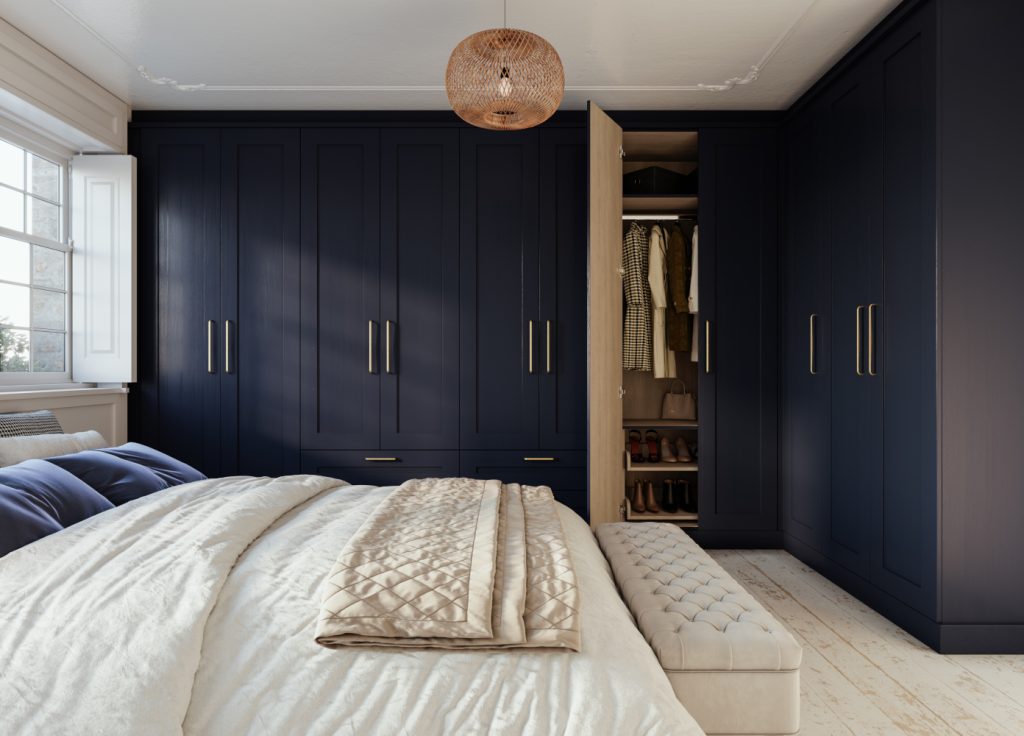
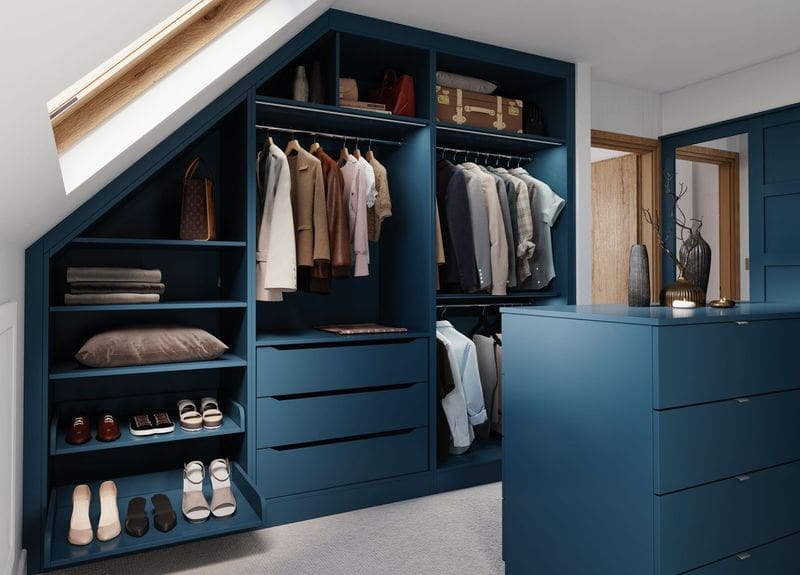
- L-shaped layouts work well in corner spaces, creating distinct zones for hanging clothes, shoe storage, and accessories without wasting the corner itself. This approach is particularly effective in converted alcoves or rooms with an angled ceiling.
- U-shaped layouts suit slightly larger walk-in spaces, typically from around 1.8 metres wide. They provide generous storage on three walls with a central walkway, making it easy to see your entire wardrobe at a glance.
- Single-sided layouts are the right choice for very narrow spaces. All storage sits on one wall, leaving the opposite side clear for movement. The result is a clean, streamlined look that works well when floor area is limited.
For inspiration on how these layouts translate to different bedroom sizes, see our small dressing room ideas and our guide on how to make a walk-in wardrobe in a spare bedroom.
Custom Storage Solutions
Generic off-the-shelf storage rarely makes the most of a compact walk-in wardrobe. Bespoke fitted wardrobes are designed around your specific items and dimensions, which means every centimetre is accounted for.
Adjustable shelves allow you to reconfigure storage as your wardrobe evolves - useful for accommodating seasonal changes between hanging space, folded knitwear, and shoe storage. Pull-out drawers integrated into the lower section of a fitted unit keep smaller items organised without requiring extra floor space.
Open shelving adds a boutique feel and keeps frequently used items visible and accessible. Where dust or light exposure is a concern, glass-fronted cabinets deliver the same open aesthetic while protecting clothing. Both approaches keep the space feeling airy rather than enclosed.
Innovative Hanging Solutions
Maximising vertical space is essential in a small walk-in wardrobe. Double hanging rails allow you to store twice as many shorter garments - shirts, jackets, skirts, and folded trousers - in the same wall run, reserving single-height sections for dresses and coats.
If your space has high ceilings, pull-down hanging systems are worth considering. A ceiling rail with a pull-down arm brings items stored at height within easy reach, effectively doubling the usable hanging depth without requiring a step or stool.
The back of wardrobe doors is often overlooked. Slim hooks or hanging racks mounted to door panels are ideal for belts, ties, scarves, and bags - items that take up disproportionate drawer space when stored flat.
Stylish Mirror Integration
Mirrors serve a dual purpose in a small walk-in wardrobe: they are functional and they make the space feel considerably larger by reflecting light and creating the impression of depth.
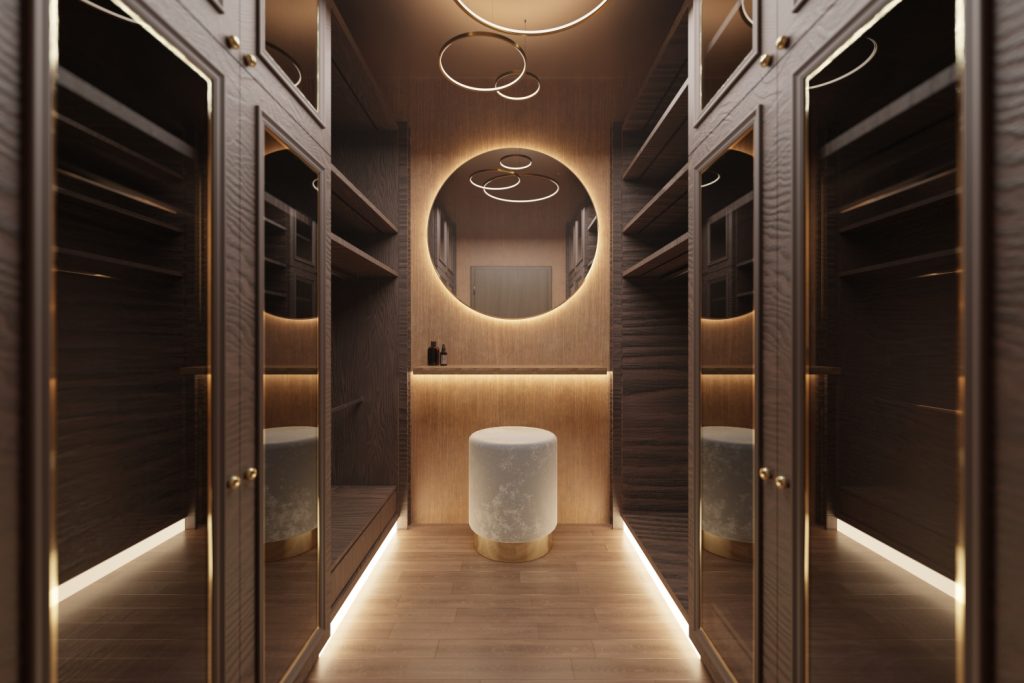
Full-length mirrors are the most practical choice, giving you a complete view of your outfit. When positioned at the end of the walkway, a full-length mirror also draws the eye through the space, making the wardrobe feel longer than it is.
Mirror-fronted wardrobes amplify this effect further, reflecting the full width of the space and creating a seamlessly luxurious finish. They are particularly effective in single-sided layouts where the opposite wall would otherwise be a blank surface.
Accent mirrors in decorative frames can act as statement pieces, adding personality while contributing to the sense of space. Look for frames that complement the colours of your fitted wardrobe unit for a cohesive finish.
Creative Lighting Options
Lighting transforms a small walk-in wardrobe from a functional storage space into somewhere genuinely pleasant to use. Poor lighting makes it harder to match colours and find items quickly - good lighting removes that daily friction.
LED strip lights installed along shelving, under cabinets, or inside hanging sections provide bright, energy-efficient illumination that highlights clothes and accessories clearly. They are low-profile, long-lasting, and easy to integrate into a fitted unit during installation. Recessed spotlights or strategically placed directional lights can highlight specific sections - a shoe display, a feature wall, or a jewellery shelf - adding visual interest as well as practicality. For a warmer, more relaxed atmosphere, pendant lights or soft-glow fittings work well if ceiling height allows.
Flooring Choices
Flooring in a walk-in wardrobe is largely a matter of comfort and consistency with the rest of the room. Carpet provides a soft, quiet underfoot feel that suits the relaxed, private nature of a dressing space. If the walk-in wardrobe is accessed directly from a carpeted bedroom, continuing the same carpet creates a seamless flow.
Hard flooring - laminate, LVT, or engineered wood - is easier to keep clean and works well in more contemporary schemes. A small rug can define the central walkway area and add warmth without committing to full carpet. Whichever option you choose, ensure it complements the overall design rather than competing with it.
Colour Schemes and Finishes
Colour and finish choices have a significant impact on how a small walk-in wardrobe feels. Lighter, neutral palettes - soft whites, warm greys, and muted tones - make the space feel larger and calmer, allowing your clothing and accessories to take centre stage.
For those who want to inject personality, accent colours work well when limited to specific elements: interior shelving panels, cabinet interiors, or a feature back wall. Used selectively, bold colour adds character without overwhelming a compact space.
Glossy finishes reflect light and contribute to a bright, contemporary aesthetic. Matt finishes offer a softer, more understated look that suits classic and shaker-style interiors. Kingswood at Home offers both, alongside a full range of painted and natural wood finishes - book a consultation to see the current finish range in person.
Design Your Walk-In Wardrobe with Kingswood at Home
The Kingswood at Home design team specialises in bespoke walk-in wardrobes and fitted storage solutions across Sussex, Surrey, Hampshire, and Kent. We visit your home, measure the space, and create a design tailored to your specific dimensions, storage needs, and style preferences - all at no obligation.
To get started, book a free design appointment with our team, or request a brochure to explore the full range of finishes and configurations.
We offer a complimentary design visit in your home.
If you would like to get in touch with us about a project, please email us or call us on 0800 470 1112.
Frequently Asked Questions
A functional walk-in wardrobe typically requires a minimum depth of around 1.5 metres to accommodate a hanging rail and comfortable movement in front of it. For very tight spaces, a single-sided layout can work from approximately 1.2 metres of depth. Width will depend on the chosen layout: a single-sided design can work in a space as narrow as 1.5 metres wide, while a U-shaped layout generally needs at least 1.8 to 2 metres of width to allow for a walkway between opposing rails.
The best layout depends on the shape and dimensions of the available space. An L-shaped layout works well in corner or irregular spaces. A U-shaped layout maximises storage where width and depth allow. A single-sided layout is best for narrow spaces where only one wall is available for fittings. A Kingswood at Home designer will assess your specific space and recommend the most practical and visually effective configuration.
The most effective approaches are mirrors, light colours, and considered lighting. A full-length mirror or mirrored wardrobe fronts will reflect light and create a sense of depth. A neutral colour palette keeps the space from feeling enclosed. LED strip lighting inside shelving and hanging sections ensures every corner is well-lit and visually open. Open shelving rather than closed cabinet doors also helps to prevent the space from feeling cramped.
In most cases, no. Converting part of an existing bedroom or spare room into a walk-in wardrobe is an internal alteration that does not require planning permission. If the conversion involves structural changes – removing a wall, for example – you may need building regulations approval. If your property is listed or in a conservation area, it is worth checking with your local authority before starting work.
The cost of a bespoke walk-in wardrobe varies depending on the size of the space, the layout, the choice of materials and finishes, and the complexity of the fitting. Kingswood at Home provides a full design and quotation as part of a free, no-obligation home consultation – book an appointment to get an accurate cost for your specific space.